

Arbeitsschwerpunkte
- Interindividuelle Unterschiede in kognitiver Leistungsfähigkeit (Intelligenz, Aufmerksamkeit)
- Chronische Schmerzen, Angst vor Schmerz, Stress
- fMRT, MRT, EEG, Psychophysiologie, Endokrinologie
- Netzwerkwissenschaften, Maschinelles Lernen, Prädiktive Modellierung neuronaler Daten
- Offene und Reproduzierbare Wissenschaft, Meta-Analysen
Aktuelle Ankündigungen
Promotionsbetreuung zum Thema “Testing the Multi-Layer Processing Theory of Human Intelligence with Megnetoencephalography (MEG)” zu vergeben. Bei Interesse: kirsten.hilger@vp-uni.de
Lehre:
- Persönlichkeitspsychologie (Bachelor Psych., 3. Sem)
- Diagnostik I (Bachelor Psych., 3. Sem.): Testtheorie & Testkonstruktion
- Diagnostik I (Bachelor Psych., 4. Sem.): Diagnostische Verfahren & Diagnostische Anwendungen
Weiter Lehre des Lehrstuhls:
- Persönlichkeitspsychologie (Master Coaching) (Alida Malicevic)
- Diagnostik II (Bachelor Psych., 6. Sem.): Gutachtenpraktikum (Linnea Heinzmann)
- Angewandte Diagnostik (Master Psych., 1. Sem.) (Dr. Antonia Werner)
Vita
2025: Ruf auf die W3 Professur für Differentielle Psychologie, Persönlichkeitspsychologie und Psychologische Diagnostik an die Vinzenz Pallotti University, Vallendar
|
2019-2025 |
Akademische Rätin und Leiterin der Forschergruppe „Networks of Behavior and Cognition“, Lehrstuhl für Psychologie I, Prof. Dr. Katja Bertsch, Universität Würzburg |
|
2022-2023 |
Professorin und Leitung des Lehrstuhl für Psychologische Diagnostik und Intervention (in Vertretung), Katholische Universität Eichstätt-Ingolstadt |
|
2018-2019 |
PostDoc, Biologische und Neurokognitive Psychologie, Prof. Dr. Christian Fiebach, Goethe-Universität Frankfurt |
|
2018 |
Forschungsaufenthalt, Department of Psychological and Brain Sciences, Prof. Olaf Sporns, Indiana University Bloomington (USA) |
|
2013 – 2018 |
Doktorandin (Dr. rer. nat), Biologische und Neurokognitive Psychologie, Prof. Dr. Christian Fiebach, Goethe-Universität Frankfurt |
|
2013 |
Master of Science, Psychologie, Goethe-Universität Frankfurt |
Forschung / Projekte
A new perspective on intelligence and the neural signature of g: Using dynamic graph-theoretical network analyses to clarify the relationship between attention and general intelligence
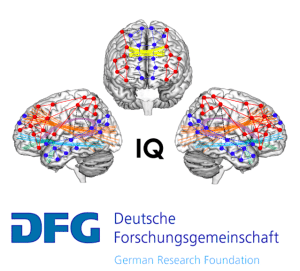 Given the enormous relevance of intelligence in education, occupation, and for positive life outcomes like health and longevity, it is an important scientific aim to understand the mechanisms behind individual differences in general intelligence. Although psychological research started to address this question long ago, there are still many unresolved issues, like e.g., the relationship between attention and intelligence. The advent of modern neuroimaging opens new perspectives and allows new insights into the biological bases of intelligence. This research project focuses on individual differences in functional interactions between different brain regions and investigates how this neural marker may contribute to clarify open questions of established intelligence conceptions.
Building on my prior research that identified intrinsic (task-independent) brain network efficiency, modularity, and brain network dynamics of attention-related brain regions as possible biological correlates of general intelligence, we apply graph-theoretical network analyses on fMRI data acquired during cognitive tasks (N>1000). On the one hand, we aim to test whether the observed associations between intelligence and intrinsic brain network characteristics may persist in the presence of active cognition. This will add to a more mechanistic understanding about the link between intelligence-related brain network organization, neurocognitive processes underlying cognition, and finally to differences in overt behavior that are, ultimately, what is measured in an intelligence test.
Further, we focus on a fundamental and general brain mechanism, i.e., brain network reconfiguration. This neural marker allows to differentiate between intelligence-related network characteristics specific to a certain task and those that are common to different tasks, and it was proposed as mirroring Spearman’s g on a neural level. This will be tested empirically in the current project. Finally, we link brain network reconfiguration to various cognitive performance measures and investigate whether this approach may contribute to clarify relations between different cognitive constructs, most specifically between attention and general intelligence.
NeuroGenConnect: Understanding Neuroticism by Integrating Genetics with Structural Brain Network Connectivity
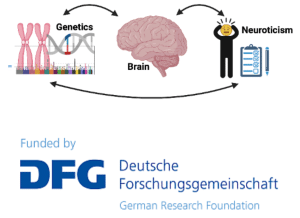
Neuroticism is a key personality trait with significant public health implications, as elevated levels of neuroticism are linked to a higher risk for mental disorders, physical diseases, and variations in mortality and longevity. While neurobiological research has identified various brain characteristics associated with neuroticism and considerable progress has been made in understanding its molecular genetic foundation, a comprehensive framework that connects genetics, brain structure, and neuroticism is still lacking. The here proposed research project aims to address this gap by adopting an integrative approach that combines machine learning, network neuroscience and molecular genetics to further our understanding of individual differences in neuroticism.
We will leverage all of our complementary experience to achieve three primary research goals: (1) Identifying a robust biomarker of neuroticism based on structural brain connectivity, (2) uncovering novel genetic markers and biological pathways associated with structural brain connectivity, and (3) examining whether the identified structural brain connectivity characteristics mediate the relationship between genetic factors and neuroticism.
To move beyond previous studies, which were often non-reproducible, we will enhance replicability by utilizing data from two large open study samples (Human Connectome Project, UK-Biobank), by implementing multiple forms of cross-validation and by replicating all analyses in independent datasets. To address the challenge of deriving causal insights from correlative research on individual differences, we will employ Mendelian randomization, an approach that uses genetic variants as natural experiments to infer potential causal links between brain structure and neuroticism, thereby offering stronger evidence than traditional correlation-based methods.
Strictly following Open Science practices, we will ensure the preregistration of each study and the free distribution of all developed analysis code. Ultimately, the results will be integrated with existing empirical findings into a new holistic model of neuroticism, providing the basis for the development of new treatment and intervention strategies for mental disorders.
OSF Preregistrations: https://osf.io/69vj8/registrations
A Network Neuroscience Perspective on Exceptional Cognitive Abilities
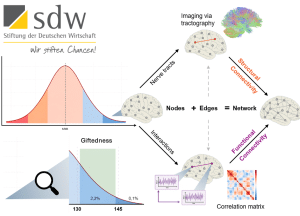
This project investigates the neural basis of exceptional cognitive abilities from a network neuroscience perspective. Specifically, it examines how structural and functional brain network characteristics differ between individuals with giftedness or high-functioning autism compared to individuals with average cognitive ability. By integrating graph-theoretical analyses of large-scale neuroimaging datasets, the project aims to identify brain network characteristics associated with exceptional cognitive performance on the upper end of the IQ distribution.
The project comprises four complementary studies. The first study investigates whether individual differences in intelligence are reflected in continuous variation in brain network organization or whether gifted individuals exhibit qualitatively distinct network characteristics. The second study examines developmental trajectories of structural and functional brain networks in gifted people from childhood to adulthood to determine whether exceptional cognitive ability is associated with accelerated or fundamentally different patterns of brain maturation. Building on these findings, the third study compares connectivity profiles associated with giftedness and high-functioning autism to identify shared and distinct neural mechanisms. Finally, the fourth study investigates sex-related differences in brain network organization as implicated by the Extreme Male Brain Theory of Autism by assessing the overlap between autism-associated and sex-related connectivity patterns.
Together, the studies of this project aim to advance our understanding of the neural architecture underlying exceptional cognitive abilities and their relationship to neurodiversity by integrating evidence across structural connectivity, functional connectivity, and structure-function coupling.
OSF Preregistration: https://osf.io/d6exr/overview
(Meta-)Meta-Analyses on Exceptional Cognitive Abilities
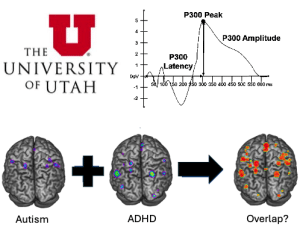
Exceptional cognitive abilities have long been a central topic in psychology, with research addressing intelligence, processing speed, ADHD, and autism. However, findings are often inconsistent, highlighting the need for comprehensive evidence syntheses. Our work addresses this by conducting preregistered systematic reviews and (meta-)meta-analyses that integrate existing findings and critically evaluate study quality. Our current projects examine (1) the relationship between intelligence and event-related potential (ERP) components, specifically the P300 and mismatch negativity (MMN), and (2) the neural network structure of ADHD, autism, and their overlap using activation likelihood estimation (ALE).
Human Cognitive Ability and the P300 Event-Related Brain Potential
The P300 is a positive ERP component measured with EEG and has been proposed as a neural marker of general cognitive ability (GCA). We systematically screened over 5,600 publications and included 49 studies in a meta-analysis. Study quality was assessed using the DIAD-ID, an adaptation of the DIAD framework for individual differences research. Preliminary results show small but significant associations between GCA and both P300 amplitude (r = .13) and latency (r = –.18). Preprint: https://doi.org/10.64898/2026.02.13.705728
Mismatch Negativity and General Cognitive Ability
This project investigates the association between GCA and mismatch negativity (MMN), an ERP component reflecting automatic detection of unexpected stimuli. After screening 997 publications, 13 studies were included. Literature quality was evaluated using an MMN-adapted DIAD-ID, revealing generally good construct validity but weaknesses in statistical reporting. Meta-analytic results indicated small but significant negative associations between GCA and MMN amplitude (r = –.08) as well as latency (r = –.14). OSF Preregistration: https://osf.io/avpqm/overview
Unraveling Neurodivergence: A Meta-Meta ALE Analysis
This project examines the neural correlates of ADHD, autism, and their co-occurrence. We extracted ALE coordinates from published meta-analyses and combined them with a new meta-analysis of co-occurring ADHD and autism. To our knowledge, this is the first meta-meta-analysis using ALE maps. By synthesizing coordinates from existing meta-analyses while accounting for overlapping samples, this approach provides a robust overview of the neural mechanisms underlying ADHD, autism, and their overlap. OSF Preregistration: https://osf.io/z4pgy/overview
New Insights from Structural-Functional Brain Network Coupling into Human Intelligence and Personality Conceptions
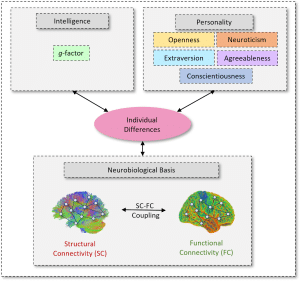
Understanding individual differences in cognition and behavior by examining their neurobiological foundations is a central goal of neuroscience and psychology. A promising approach involves investigating the relationship between structural and functional brain networks – specifically, how their alignment, known as structural-functional brain network coupling (SC-FC coupling), relates to key psychological traits such as intelligence and personality. Intelligence, defined as the ability to reason, plan, solve problems, think abstractly, comprehend complex ideas, and learn from experience, is one of the most widely studied constructs in psychological science due to its strong association with important life outcomes such as academic achievement and occupational success. Similarly, personality traits—particularly those described by the Big Five framework—play a crucial role in shaping behavioral patterns and social functioning across the lifespan. Despite the significance of these traits, it remains insufficiently understood how they are manifested in the brain.
This project addresses this gap by investigating the relationship between SC-FC coupling and both general intelligence and personality in two large-scale, open-access neuroimaging datasets (HCP; AOMIC; N > 1000). SC-FC coupling is modeled under both resting-state and task-based fMRI conditions, using advanced measures that capture functional interactions supported by underlying structural pathways. Furthermore, state-of-the-art machine learning and predictive modeling techniques are employed to assess how well region-specific SC-FC coupling patterns can predict individual differences in intelligence and personality traits.
By combining multimodal neuroimaging data with innovative computational methods, this project seeks to contribute to a deeper understanding of how cognitive and personality traits are rooted in the brain. It also aims to inform psychological theories about the shared and distinct neural mechanisms underlying intelligence and personality, and how these traits might manifest more clearly under trait-relevant conditions—both on a behavioral and neural level. Ultimately, the project will provide new tools and conceptual frameworks for the study of human individual differences.
The neural code of neuroticism: Insights from inter-subject representational similarity analysis
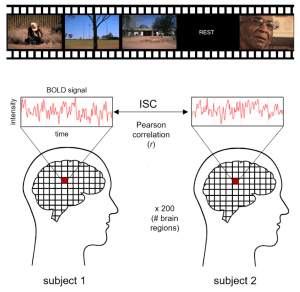
Neuroticism, the tendency to experience negative emotions such as anxiety, irritability or emotional instability, is a key risk factor for mental illness. Identifying its neurobiological basis, particularly whether there is a shared neural foundation among individuals, is therefore essential.
This project aims to determine whether participants’ similarity in neuroticism is also reflected in the similarity of their brain activity during movie watching, as such naturalistic stimuli may best reflect real-world experiences. Building in our recent work and established personality theories suggesting that neural characteristics of traits may be more pronounced in trait-relevant contexts, we additionally investigate whether this brain-trait representational similarity is stronger during movie scenes rated as particularly relevant to neuroticism.
To identify such trait-relevant scenes, we conducted an independent online study. We then apply Inter-Subject Representational Similarity Analysis (IS-RSA) to a subset of participants (N = 184) from the Human Connectome Project (HCP), with available fMRI data during movie viewing and neuroticism scores from the NEO-FFI. We examine the relationship between neuroticism and brain activity at whole-brain, network, and region-specific levels, while accounting for the influence of trait-relevant contexts. In addition, different models of trait similarity are compared to gain deeper conceptual insights into how neuroticism is reflected in brain function.
By linking similarity in neuroticism to shared neural representations during naturalistic stimuli, this research contributes to our knowledge of the respective neurobiological foundations. A deeper understanding of these mechanisms could ultimately inform interventions for mental health conditions associated with heightened neuroticism.
New Insights from Structural-Functional Brain Network Coupling into Human Intelligence and Personality Conceptions
Understanding individual differences in cognition and behavior by examining their neurobiological foundations is a central goal of neuroscience and psychology. A promising approach involves investigating the relationship between structural and functional brain networks – specifically, how their alignment, known as structural-functional brain network coupling (SC-FC coupling), relates to key psychological traits such as intelligence and personality. Intelligence, defined as the ability to reason, plan, solve problems, think abstractly, comprehend complex ideas, and learn from experience, is one of the most widely studied constructs in psychological science due to its strong association with important life outcomes such as academic achievement and occupational success. Similarly, personality traits—particularly those described by the Big Five framework—play a crucial role in shaping behavioral patterns and social functioning across the lifespan. Despite the significance of these traits, it remains insufficiently understood how they are manifested in the brain.
This project addresses this gap by investigating the relationship between SC-FC coupling and both general intelligence and personality in two large-scale, open-access neuroimaging datasets (HCP; AOMIC; N > 1000). SC-FC coupling is modeled under both resting-state and task-based fMRI conditions, using advanced measures that capture functional interactions supported by underlying structural pathways. Furthermore, state-of-the-art machine learning and predictive modeling techniques are employed to assess how well region-specific SC-FC coupling patterns can predict individual differences in intelligence and personality traits.
By combining multimodal neuroimaging data with innovative computational methods, this project seeks to contribute to a deeper understanding of how cognitive and personality traits are rooted in the brain. It also aims to inform psychological theories about the shared and distinct neural mechanisms underlying intelligence and personality, and how these traits might manifest more clearly under trait-relevant conditions—both on a behavioral and neural level. Ultimately, the project will provide new tools and conceptual frameworks for the study of human individual differences.
FOPS-ID: Fear of Pain, Approach and Avoidance – in the Context of Stress and Individual Variation
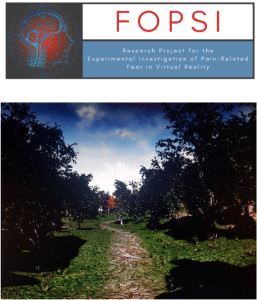

Chronic pain represents a severe and common burden with enormous effects on patients everyday life. In accordance to the Fear Avoidance Model of chronic pain (Vlaeyen & Linton, 2012) mechanisms of fear learning and avoidance behavior play a major role in the development and the maintenance of chronic pain conditions. The model proposes a self-reinforcing vicious circle of fear, avoidance, disability and pain. However, only a small proportion of people enters such a vicious circle after an acute pain episode (e.g., after an injury or an medical intervention) and the factors that determine whether a person may enter this circle or not (and develops chronic pain) are still an open question.
Our team focuses explicitly on this question and investigates the influence of stress and stable individual differences (e.g., personality factors) on the acquisition of Fear of Pain. Therefore, we transfer methods from traditional fear conditioning research to Virtual Reality. A new experimental paradigm is developed allowing to experimentally induce (and extinguish) Fear of Pain as well as to investigate effects of context and motor imaginary. Finally, we use various biophysiological assessments (e.g., electrodermal activity, EDA, cortisol concentration, heat rate) and electroencephalographical (EEG) recordings to clarify the biological underpinnings of state Fear of Pain, trait Fear of Pain, and to understand the mechanisms of potential modulators (e.g., stress, personality).
Currently, our research endeavors focus on five complementary questions:
– Can Fear of Pain be learned (and extinguished) in the Virtual Reality?
– Do persons with higher disposition for pain-related fear (trait FoP) show stronger physiological reactions to acute stress?
– Does acute stress lead to an increased learning rate of pain-related fear (state FoP)?
– What are the underlying neurophysiological mechanisms of state FoP acquisition and do intrinsic neural oscillation patterns relate to stable individual differences in Fear of Pain (trait FoP)?
– Can we use positive motor imaginary to reduce Fear of Pain (also in chronic pain patients)?
Mehr Informationen hier: Link
Team
 Kirsten Hilger
Head of “Networks of Behaviour and Cognition”
(Prof. Dr. rer. nat. Psychology, M. Sc. Psychology)
 Kirsten works as Full Professor for Differential Psychology, Personality Psychology and Psychological Diagnostics at Vinzenz Pallotti University Vallendar, Germany. She earned her PhD in Cognitive Neuroscience in 2018 at Goethe University Frankfurt, Germany, studying the neural bases of intelligence from a graph-theoretical Network Neuroscience perspective. In her time as post-doc and Assistant Professor at Julius-Maximilians University Würzburg she broadened her perspective to clinical research topics, in particular to ADHD, ASD and the study of pain-related fear as critically involved in chronic pain. Virtual Reality, EEG as well as endocrinology and psychophysiology complete her methodological profile.
However, her primary focus continnues to be the Network Neurosciences of individual differences in Intelligence and Personality. In this regard, her current projects strive for the further development of Machine Learning-based Predictive Modelling approaches and large-scale Meta-(Meta-)Analyses.
Contact: kirsten.hilger@vp-uni.de, kirsten.hilger@uni-wuerzburg.de
 Paulina Plinke
PhD Student (M. A. Economic Geography, B. Sc. Psychology, B. A. Business Administration)
Research interests:
– Intelligence
– Giftedness
– (High-Functioning) Autism
– Sex-Differences
– Network Neuroscience
– Meta-Analysis
– fMRI, DTI
Contact: paulina.plinke@vp-uni.de
 Tobias Nöth
PhD Student (B.Sc. Psychology)
Research interests:
– Intelligence
– Network Neuroscience
– Meta-Analysis
– Open Science
– P300, MMN
– EEG, fMRI
Contact: tobias.noeth@vp-uni.de
 Elias Schnaubelt
Student Assistant
Research interests:
– Neural Correlates of Individual Differences
– Neuromodulation of Brain Networks and Personality
– Interactions between Personality Traits and Cognitive Vulnerability
– DTI, fMRI
Contact: elias.schnaubelt@studierende.vp-uni.de
 Jonas Thiele
Postdoctoral Associate (Dr. rer. nat. Psych., M. Eng. Engineering)
Research interests:
– Intelligence
– Network Neuroscience
– Brain states
– Machine Learning
– Neural Networks
– Interpretability and explanatory value of predictive modeling approaches
– fMRI, EEG
Contact: jonas.thiele@fau.de
 Johanna Popp
Postdoctoral Associate (Dr. rer. nat. Psych., M. Sc. Biomedical Science)
Research interests:
– Intelligence
– Big-5 Personality Traits
– Trait-relevance
– Neuroticism
– Network Neuroscience
– Structural-functional brain network coupling
– fMRI, DTI
Contact: johanna.popp@uni-wuerzburg.de
 Maren Wehrheim
Postdoctoral Associate (Dr. rer. nat. Neurosc., M. Sc. Economic Computer Science)
Research interests:
– General Cognitive Ability
– Neuroticism
– Network Neuroscience
– Machine Learning
– Graph Neural Networks
– Pattern Recognition
– DTI, molecular genetics
Contact: maren.wehrheim@google.de
 Aylin Richter
Associated Researcher (B. Sc. Biology)
Research interests:
– Intelligence
– ADHD
– Autistic Spectrum Disorder
– Network Neuroscience
– Meta-Analysis
– Brain Signal Complexity
– EEG, fMRI
Contact: aylin.richter@proton.me
 Melanie Celina
Undergraduate Student (Psychology)
Research interests:
– Intelligence and vulnerability
– Network Neuroscience
– Meta-Analysis
– Open Science
– HiTOP Model
– EEG, fMRI
Contact: melanie.celina@stud-mail.uni-wuerzburg.de
 Alida Malicevic
Lecturer & PhD student at Frankfurt University (M.Sc. Clinical Psychology)
Research interests:
– Impstor-phenomenon
– Dark Triad personality traits
– (Non-)Clinical Interventions
– Personality assessment
Teaching:
– Personality Psychology (Master Coaching)
Contact: malicevic@psych.uni-frankfurt.de; alida.malicevic@vp-uni.de
 Linnea Heinzmann
Lecturer (M.Sc. Psychology, licensed clinical psychologist)
Research interests:
– Clinical Psychology / Psychotherapy
– Psychoanalysis / Psychodynamic Theory
– Sexuality / Sex Therapy
– Somatic Narration
– Psychological Asessment / Diagnostics
Teaching:
– Diagnostics II (Bachelor Psychology)
Contact: linnea.heinzmann@vp-uni.de
 Dr. Antonia Werner
Lecturer (M.Sc. Psychology)
Research interests:
– Self-criticism & mental health
– Self-compassion
– Stigmatization of mental disorders
– Health literacy, promotion & prevention
– Test development and validation
– Psychometrics & questionnaire development
– Questionnaire reduction (short-form development)
Teaching:
– Applied Diagnostics (Master Psychology)
Contact: antonia.werner@vp-uni.de
Mehr Informationen hier: Link
Veröffentlichungen
Nöth, T., Euler, M., & Hilger, K. (under Review). Mismatch Negativity and General Cognitive Ability – A Meta-Analysis. (Preprint: https://www.biorxiv.org/content/10.64898/2026.08.06.743003v1
Thiele, J. A., & Hilger, K. (under Review). The Multilayer Processing Theory of Human Intelligence. (Preprint: osf.io/preprints/psyarxiv/p725j_v1)
Chuderski, A.*, Goriounove, N.*, Hilger, K.*, Moore, M., & Colom, R. (under Review). An Integrative Framework of Human Intelligence. Trends in Cognitve Science.
Hilger, K., & Gignac, G. E., (under Review). The Evolving Neuroscience of Intelligence: From Model Fitting to AI-Assisted Model Discovery. In A Research Agenda for Intelligence. Edward Elgar Publishing.
Euler, M., & Hilger, K. (under Review). Human Cognitive Ability and the P300 Event-Related Brain Potential: A Systematic Review and Meta-Analysis. (Preprint: https://www.biorxiv.org/content/10.64898/2026.02.13.705728v1)
Popp, J., Weiß, M., Faskowitz, J., & Hilger, K. (under Review). The Neural Code of Neuroticism. (Preprint: bioRxiv, 2026.01.19.700296; https://www.biorxiv.org/content/10.64898/2026.01.19.700296v1)
Hilger, K., Talic, I., & Renner, K-H. (under Review). Individual Differences in the Correspondence Between Psychological and Physiological Stress Indicators. (Preprint: bioRxiv, 2024.08.23.609328. https://doi.org/10.1101/2024.08.23.609328)
Vyverman, J., Timmers, I., Meewis, S. H., Smeets, T., & Hilger, K. (2026). Individual Dynamics in Stress-Related Pain Response. Psychoneuroendocrinology. 10.1016/j.psyneuen.2026.107974
Popp, J., Thiele, J. A., Faskowitz, J., Seguin, C., Sporns, O., & Hilger, K. (2026). Trait-Relevant Tasks Improve Personality Prediction from Structural-Functional Brain Network Coupling. Human Brain Mappting. (Preprint: bioRxiv 2025.09.17.676801; https://doi.org/10.1101/2025.09.17.676801)
Puhlmann, L., Koppold, A., Feld, G., Lonsdorf, T. B., Hilger, K., Vogel, S., … Hartmann, H. (2026). There is no research on a dead planet – Fostering ecologically sustainable open science practices in neuroscience. Nature Human Behaviour. https://www.nature.com/articles/s41562-026-02426-3 (Preprint: https://doi.org/10.31219/osf.io/rju75_v1)
Yan, J., Iturria-Medina, Y., Bezgin, G., Toussaint, P. J., Hilger, K., Genç, E., Evans, A., & Karama, S. (2026). Association between Brain Morphometry and Cognitive Function during Adolescence: Insights from a Comprehensive Large-Scale Analysis from 9 to 15 Years Old. Nature Communications Biology. (Preprint: bioRxiv, 2024.06.18.599653; https://doi.org/10.1101/2024.06.18.599653)
Thiele, J. A., Faskowitz, J., Sporns, O., Chuderski, A., Jung, R., & Hilger, K. (2026). Decoding the Human Brain during Intelligence Testing. Nature Communications Biology, 9, 9. https://www.nature.com/articles/s42003-025-09354-4
Mückstein, M., Hilger, K., Heinzel, S., Grnacher, U., Rapp, M., & Stelle, C. (2025). Network Neuroscience of Multitasking: Local Features Matter. Human Brain Mapping, 46(18), e70434. https://doi.org/10.1002/hbm.70434
Popp, J. L., Thiele, J. A., Faskowitz, J., Seguin, C., Sporns, O., & Hilger, K. (2025). Structural-Functional Brain Network Coupling During Task Performance Reveals Intelligence-Relevant Communication Strategies. Nature Communications Biology, 8, 855. https://www.nature.com/articles/s42003-025-08231-4.
DeYoung, C. G.*, Hilger, K.*, Hanson, J. L., Abend, R., Allen, T., Beaty, R., … Wacker, J. (2025). Beyond Increasing Sample Sizes: Optimizing Effect Sizes in Neuroimaging Research on Individual Differences, Journal of Cognitive Neuroscience, 1-12. https://doi.org/10.1162/jocn_a_02297
Thiele, J. A., Faskowitz, J., Sporns, O., & Hilger, K. (2024). Choosing explanation over performance: Insights from machine learning-based prediction of human intelligence from brain connectivity? PNAS Nexus, 12(3), pgae519. https://doi.org/10.1093/pnasnexus/pgae519. (Direct Access Link: https://academic.oup.com/pnasnexus/article/3/12/pgae519/7915712)
Seeger, L., Kuebler, A., & Hilger, K. (2024). Drop-out rates in animal-assisted psychotherapy – results of a quantitative meta-analysis. British Journal of Clinical Psychology, 1-22. https://doi.org/10.1111/bjc.12492
Pfeiffer, M., Kuebler, A., & Hilger, K. (2024). Modulation of Human Frontal Midline Theta by Neurofeedback: A Systematic Review and Quantitative Meta-Analysis. Neuroscience and Biobehavioral Reviews, 105696. https://doi.org/10.1016/j.neubiorev.2024.105696
Popp, J. L., Thiele, J. A., Faskowitz, J., Seguin, C., Sporns, O., & Hilger, K. (2024). Structural-functional brain network coupling predicts human cognitive ability, Neuroimage, 120563. https://doi.org/10.1016/j.neuroimage.2024.120563
DeYoung, C. G., Sassenberg, T., Abend, R., Allen, T., Beaty, R., Bellgrove, M., … Hilger, K., … Wacker, J. (2023). Reproducible between-person brain-behavior associations do not always require thousands of individuals. (Preprint: https://psyarxiv.com/sfnmk)
Hilger, K., Häge, A., Zedler, C., Jost, M., & Pauli, P. (2023). Virtual Reality to understand Pain-Associated Approach Behaviour: A Proof-of-Concept-Study. Scientific Reports, 13, 13799. https://rdcu.be/dkd8f
Nebe, S., Reutter, M., Baker, D., Bölte, J., Domes, G., Gamer, M., Gärtner, A., Gießing, C., Mann, C. G. née, Hilger, K., Jawinski, P., Kulke, L., Lischke, A., Markett, S., Meier, M., Merz, C., Popov, T., Puhlmann, L., Quintana, D., Schäfer, T., Schubert, A.-L., Sperl, M. F. J., Vehlen, A., Lonsdorf, T., & Feld, G. (2023). Enhancing precision in human neuroscience. eLife, 12, e85980. https://doi.org/10.7554/eLife.85980
Glück, V. M.*, Engelke, P.*, Hilger, K.*, Wong, A. H. K., Boschet, J. M. & Pittig, A. (2023). A network perspective on real-life threat, anxiety and avoidance. Journal of Clinical Psychology, 1-16. https://doi.org/10.1002/jclp.23575
Wehrheim, M. H., Faskowitz, J., Sporns, O., Fiebach, C. J., Kaschube, M., & Hilger, K. (2023). Few Temporally Distributed Brain States Predict Human Cognitive Ability. NeuroImage, 120246. https://doi.org/10.1016/j.neuroimage.2023.120246
Verona, E., Chen, H., Hall, B.,….Hilger, K.,…Clayson, P. E. (2023, in-principle acceptance, Registered Report Stage 1, Cerebral Cortex). Fear, Anxiety, and the Error-Related Negativity: A Registered Report of a Multi-Site Replication Study.
Thiele, J., Richter, A., & Hilger, K. (2023). Multimodal Brain Signal Complexity Predicts Human Intelligence. eNeuro. https://doi.org/10.1523/ENEURO.0345-22.2022
Hilger, K., & Euler, M. (2022). Intelligence and Visual Mismatch Negativity: Is Pre-Attentive Visual Discrimination Related to General Cognitive Ability? Journal of Cognitive Neuroscience, 35 (3), 1-17. https://doi.org/10.1162/jocn_a_01946
Kiser, D., Gromer, D., Pauli, P., & Hilger, K. (2022). A Virtual Reality Social Conditioned Place Preference Paradigm for Humans: Does Trait Social Anxiety Affect Approach and Avoidance of Virtual Agents? Frontiers in Virtual Reality, 3, 916575. https://doi.org/10.3389/frvir.2022.916575
Frischkorn, G. T.*, Hilger, K.*, Kretzschmar, A.* & Schubert, A-L.* (2022). Intelligenzdiagnostik der Zukunft: Ein Plädoyer für eine prozessorientierte und biologisch inspirierte Intelligenzmessung. Psychologische Rundschau, 73 (3), 173-189. https://doi.org/10.1026/0033-3042/a000598 (English Translation: https://psyarxiv.com/3sf7m/)
Hilger, K., Spinath, F., Troche, S. & Schubert, A-L. (2022). The Biological Basis of Intelligence: Benchmark Findings. Intelligence, 93, 101665. (Free access link: https://authors.elsevier.com/c/1fEyjaSXL~mDC)
Linhardt, M., Kiser, D., Pauli, P, & Hilger, K. (2022). Approach and Avoidance Beyond Verbal Measures: A Quantitative Meta-Analysis of Human Conditioned Place Preference Studies. Behavioural Brain Research, 113834. https://doi.org/10.1016/j.bbr.2022.113834
Thiele, J., Faskowitz, J., Sporns, O., & Hilger, K. (2022). Multi-Task Brain Network Reconfiguration is Inversely Associated with General Intelligence. Cerebral Cortex, 1-11. Free-access link: https://academic.oup.com/cercor/advance-article/doi/10.1093/cercor/bhab473/6523266?guestAccessKey=376a3a6e-9f15-4b27-be7a-a0e08cd6bf64
Hilger, K., & Hewig, J. (2022). Individual Differences in the Focus: Understanding Variations in Pain-Related Fear and Avoidance Behavior from the Perspective of Personality Science, PAIN, 163(2), e151-152. http://doi.org/10.1097/j.pain.0000000000002359
Hilger, K., & Sporns, O. (2021). Network Neuroscience Methods in Studying Intelligence. In A. K. Barbey, S. Kamara, & R. Haier (Eds.), The Cambridge Handbook of Intelligence and Cognitive Neuroscience. Cambridge University Press. https://doi.org/10.1017/9781108635462
Hilger, K. & Markett, S. (2021). Personality network neuroscience: promises and challenges on the way towards a unifying framework of individual variability. Network Neuroscience, 5(2), 1-34. https://doi.org/10.1162/netn_a_00198
Hilger, K., Sassenhagen, J., Kühnhausen, J., Reuter, M. Schwarz, U., Gawrilow, C, & Fiebach, C. J. (2020). Neurophysiological markers of ADHD symptoms in typically-developing children. Scientific Reports, 10, 22460. https://doi.org/10.1038/s41598-020-80562-0
Hilger, K., Fukushima, M., Sporns, O., & Fiebach, C. J. (2020). Temporal stability of functional brain modules associated with human intelligence. Human brain mapping, 41(2), 362-372.
Hilger, K., Winter, N., Leenings, R., Sassenhagen, J., Hahn, T., Basten, U., & Fiebach, C. J. (2020). Predicting Intelligence fron Brain Gray Matter Volume. Brain Structure and Function, 225, 2111-2129. https://doi.org/10.1007/s00429-020-02113-7
Hilger, K., & Fiebach, C., J. (2019). ADHD Symptoms are Associated with the Modular Structure of Intrinsic Brain Networks in a Representative Sample of Healthy Adults. Network Neuroscience, 3(2), 567-588. https://doi.org/10.1162/netn_a_00083
Hilger, K., Ekman, M., Fiebach, C. J., & Basten, U. (2017). Efficient hubs in the intelligent brain: Nodal efficiency of hub regions in the salience network is associated with general intelligence. Intelligence, 60, 10-25. http://doi.org/10.1016/j.intell.2016.11.001
Galeano Weber, E., Hahn, T., Hilger, K., & Fiebach, C. J. (2017). Distributed patterns of occipito-parietal functional connectivity predict the precision and variability of visual working memory. NeuroImage, 146, 404-418.
Hilger, K., Ekman, M., Fiebach, C. J., & Basten, U. (2017). Intelligence is associated with the modular structure of intrinsic brain networks. Scientific Reports, 7(1), 1–12. https://doi.org/10.1038/s41598-017-15795-7
Basten, U., Hilger, K., & Fiebach, C. J. (2015). Where smart brains are different: A quantitative meta-analysis of functional and structural brain imaging studies on intelligence. Intelligence, 51, 10–27. http://doi.org/10.1016/j.intell.2015.04.009
* shared first authorship.
Mehr Informationen hier: Link
Mitgliedschaften
International Society of Intelligence Research (ISIR)
Deutsche Gesellschaft für Psychologie (DGPs)
- Interessensgruppe Offene und Reproduzierbare Wissenschaft (IGOR)
- Fachgruppe Persönlichkeitspsychologie und Psychologische Diagnostik
- Fachgruppe Biologische Psychologie und Neuropsychologie
Deutsche Gesellschaft für Psychophysiologie und ihre Anwendung (DGPA)
Lehre
Lehre im WS 2025/2026:
- Persönlichkeitspsychologie
- Diagnostik I (3. Sem.): Testtheorie & Testkonstruktion
- Diagnostik I (4. Sem.): Diagnostische Verfahren & Diagnostische Anwendungen
Medien
Kontakt

Prof. Dr. Kirsten Hilger
Vinzenz Pallotti University
Pallottistr. 3
56179 Vallendar
Tel.: +49 261 6402-0
E-Mail: Kirsten.Hilger@vp-uni.de


Fühlen Sie sich berufen?
Gerne helfen wir Ihnen bei der Entscheidungsfindung und bei offenen Fragen rund um das Studium an der Vinzenz Pallotti University unter studienberatung@vp-uni.de.